Through the Coach's Lens What Racing Never Taught Me About Power Data
Posted by Alex Dowsett on June 2, 2026
The individual time trial or ITT is often referred to as “the race of truth,” because it strips bike racing down to its purest form. A start line, a finish line, you and your bike. No teammates, no peloton, no drafting, no complicated strategizing, other than getting from point A to point B as fast as humanly possible. It’s a discipline that reveals as much about the quality of a rider’s engine as it does their mental fortitude and willingness to suffer. One rider who carved out a prolific name for himself in this unforgiving discipline throughout his career is 4iiii ambassador, Alex Dowsett, who raced to an impressive 6 British ITT national titles, a World Hour Record, and two Giro D’Italia stage wins in his 13 years as a WorldTour pro. A few seasons removed from his racing days, and balancing his time as a Performance Engineer at Astana Qazaqstan, as well as a personal coach, Alex is now dispensing his hard-earned insights on watts and how to best make use of them, and the data they provide, to support the ultimate goal of going faster! Give our latest blog a read, as penned by the man himself, to pick up some tips on how you can get the most out of your sweat equity on the bike.

For fifteen years, a power meter told me one thing: how hard I was working right now. I’d stare at the number, make a decision — back off, hold on, dig deeper — and move on. The data was a tool for survival. A race unfolding in real time doesn’t ask you to reflect. It asks you to respond.
Since stepping back from professional racing and moving into coaching, I’ve had to completely relearn how to read power data. Not because the numbers changed, but because the questions I’m asking of them have.
When You’re the Athlete, Data Is About Validating Feeling
Here’s something I never said out loud during my career: I used power data mainly to justify and validate how I felt.
If I felt terrible and my numbers confirmed it, it’d almost put my mind at ease that something was off. If I felt great and the power was high, I’d push harder. The data was a mirror. A very expensive, very accurate mirror — but a mirror nonetheless.
What I was rarely doing was interrogating the relationship between how I felt and what the numbers said. When those two things disagreed, I’d usually trust the feeling — but it would plant seeds of doubt. In hindsight, that was sometimes exactly right. Other times, it was the single biggest performance limiter I had.
I had some bad power meters in my time, I can’t lie, and the damage a bad power meter can cause by misreading by a few percent is surprisingly large.

The Shift: Coaching Changes Everything
When I started working with athletes as a coach, the first thing I noticed was how differently riders interpret the same data. Some focus on it intently and it manoeuvres feeling out of the picture entirely; others — like my wife when she trained for an Ironman — ignore it completely and trust a coach (or husband) to look into the data for them.
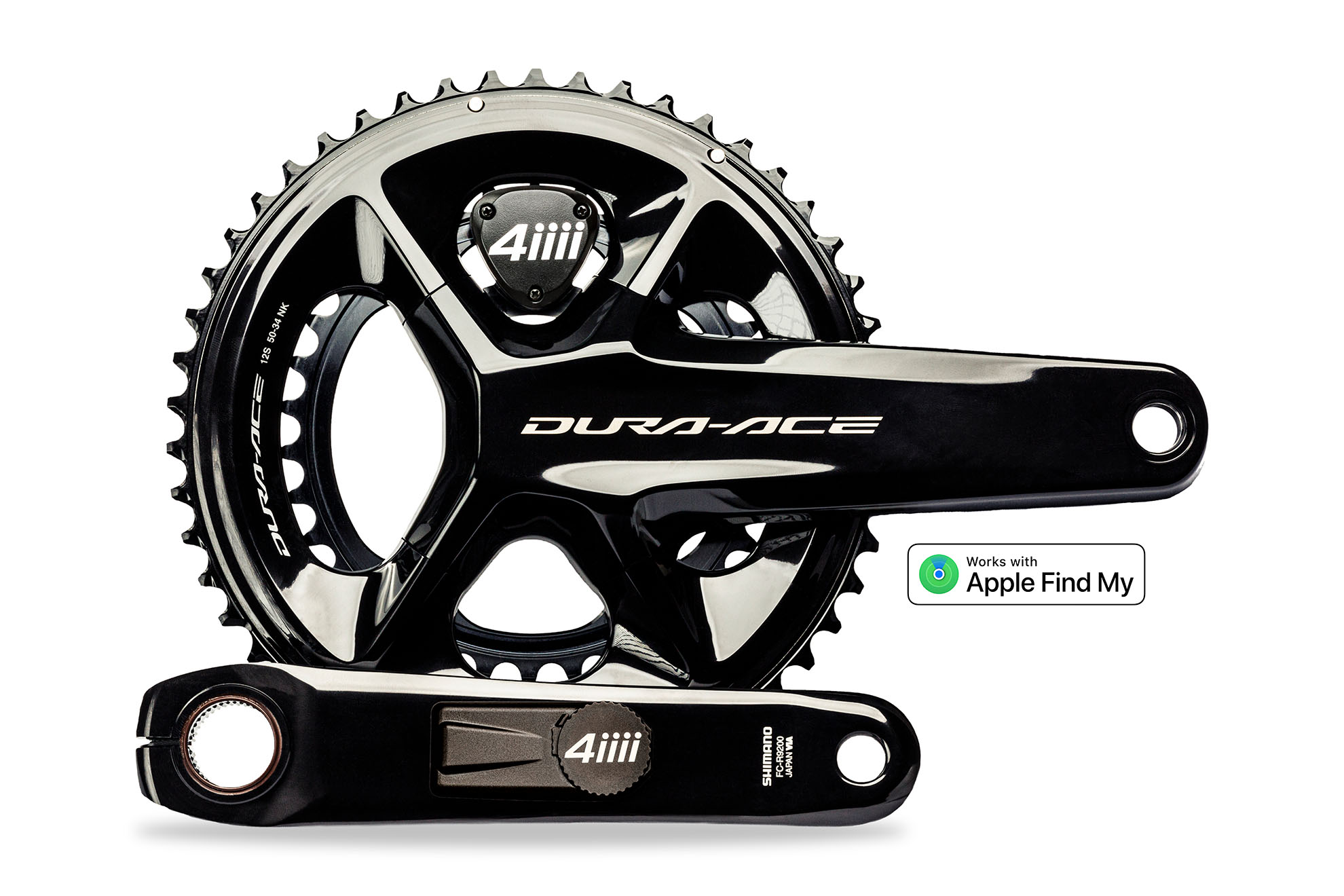
Take two athletes I’m currently working with — both competitive amateurs, both using 4iiii PRECISION 3+ Powermeters, both targeting Gran Fondos this summer. On paper, their training loads look similar. In practice, they are completely different riders.
Rider A is a data maximalist. He trains by power, races by power, and after every session sends me a paragraph of observations alongside his file. He’s precise, disciplined, and has a VO2max that should make him faster than he is. His problem: he’s so locked into hitting his zones that he’s lost the ability to feel it. When a race goes sideways — a surge he didn’t expect, a climb longer than planned — he looks at his number, sees red, and backs off. He’s optimizing himself into mediocrity. Real-world events are unpredictable in what the power requirements are, so I try to build unpredictability into his training — which is harder than it sounds.
Rider B barely glances at her head unit while riding. She trains on feel, competes on instinct, and regularly produces efforts that surprise even her. But she also blows up periodically in ways that are completely avoidable. Her pacing is inconsistent, her recovery weeks aren’t actually recovery, and she has no real idea why some days feel brilliant and others feel like riding through sand. She might also be my wife.
Two athletes. Two completely opposite problems. One tool — used differently — can help both of them.
For Rider A, I’ve deliberately restricted his data-led training sessions. He trains with power recording, but his head unit only shows time and speed during intervals. The power file downloads afterwards, and we review it together. He’s learning to feel effort again, to trust discomfort, to let a race be a race rather than a series of decisions delegated to a device.
For Rider B, I’ve introduced structured power targets for the first time — but only for specific sessions. Long steady efforts, threshold work. The goal isn’t to make her a data athlete. It’s to give her anchor points so she can calibrate what “hard” actually means, and use that calibration when it counts. Erg mode on a smart trainer has been genuinely useful here.
Case Study: The Day I Didn’t Trust My Power Meter (And Nearly Talked Myself Out of the Best Ride of My Career)
Tirreno-Adriatico, 2022. The usual ten-kilometre time trial up and down the Adriatic coast. Standard race, standard preparation — except that during warm-up, I was seeing power numbers that didn’t match how I felt. The effort felt controlled. The watts said otherwise. That year, we’d been having some reliability issues with our power meters and head units. So in the few minutes I had before the ramp, I made a decision: the numbers were wrong. I was going to race entirely on feel.
I rolled down the start ramp and the power stayed high. Consistently above 500 watts. Not a spike — sustained. At some point mid-effort, I actually laughed to myself. So this is what it feels like to be Filippo Ganna.
I crossed the line and was told I was in the hot seat — fastest time at that point. Honestly? My first reaction was mild irritation. The calibre of the field at Tirreno means sitting in the hot seat is usually just a longer wait before someone faster comes through. I wanted to get back to the hotel and recover for the remaining stages.
Then the results started coming in.
I finished fifth. The four riders who beat me were Ganna, Pogacar, Evenepoel, and Kasper Asgren. Not bad company to lose to. When I pulled up the data afterwards, it was all there in black and white: 465 watts average for a 12-kilometre TT. One of the best power files I’d ever produced. The power meter hadn’t been lying. I’d just been on an absolute blinder of a day — and I’d nearly talked myself out of believing it.
There are two things that story tells me now, coaching from the other side.

First: a power meter you don’t trust is worse than no power meter at all. The moment I decided the numbers were wrong, I discarded the one objective reference point I had. If I’d been riding with a meter I trusted completely — one I knew was accurate — that split-second decision doesn’t happen. This is a big part of why I partnered with 4iiii. Reliability isn’t a nice-to-have. It’s the foundation everything else is built on. The second you start second-guessing your device mid-effort, you’ve lost the tool entirely.
Second, and this one is more uncomfortable: if I had trusted my power meter and acted on it, I might have ridden worse.
Hear me out. Let’s say I’d looked at 500+ watts in the opening kilometres and trusted the data completely. Every historical ride in my head would have screamed at me to back off. You’ll blow up. You always blow up at this pace. I’d have started more conservatively, tried to bank time in the second half. But here’s the physics: time trialling doesn’t work that way. The relationship between speed and power output means that recovering time in the back half of a TT isn’t a symmetric trade. To go faster, you don’t need proportionally more power — you need exponentially more. Time lost early at a conservative pace is almost never fully recovered by going harder later.
I would have been “smart.” I would have been disciplined. And I would have finished further down the results sheet.
The lesson I took wasn’t, ignore your data. It was this: know the difference between your data telling you something true and your interpretation of that data limiting you. The power meter was right. My assumptions about what was possible were wrong. Coaching has taught me to look for that gap in the athletes I work with — the place where accurate numbers and inaccurate self-belief create a ceiling that doesn’t need to exist.

Why I Stopped Telling Athletes They’re Doing an FTP Test
FTP is supposed to be the foundation of power-based training. Get it right, and every zone, every target, every session sits on solid ground. Get it wrong, and you’re essentially training a fiction.
The problem is that most athletes have the wrong FTP — and the way we test for it is a big part of why.
There are two failure modes I see constantly. The first is ego. An athlete finishes an FTP test, looks at the number, decides it doesn’t reflect how good they are, and manually bumps it up. They spend the next training block working in zones that are slightly too hard, accumulating fatigue they don’t understand, and wondering why their performance isn’t improving. The data is telling them the truth. They’ve decided not to listen.
The second failure mode is subtler and, I’d argue, more common: the test itself produces an underperformance. Not because the athlete is weak, but because they know what the test is. The moment someone is told “today is your FTP test,” something shifts. The anxiety of being assessed — of producing a number that will define their training for the next several months — sits on their chest before they even clip in. They go out too conservatively to avoid blowing up. Or they go out too hard, panic, and back off at exactly the wrong moment. Either way, the number they produce isn’t the number they’re capable of.
I’ve seen riders test fifteen to twenty watts below what their actual training data suggests they can sustain. That’s not a small margin. Fifteen watts at threshold changes everything — the zones, the targets, the feel of every session.
So I stopped telling athletes when they’re doing an FTP test.
What I do instead is set them a session that looks, on the surface, like a structured training ride. Progressive efforts, logical pacing, nothing that announces itself as an assessment. What I don’t tell them is that the session is designed to be unfinishable.
It’s not a traditional ramp test. It doesn’t go up in neat increments every minute until failure. It’s more like a sustained escalation — efforts that build across the session in a way that feels like hard but manageable training, until it isn’t. The point at which they stop is the data point I’m actually after.
If they complete it, their FTP goes up. Full stop. The session was designed around a threshold that turned out to be too low.
If they don’t complete it, the question becomes where they stopped. Did they make it through seventy percent of the session? Eighty? Ninety? That tells me something precise about where their actual threshold sits, stripped of the anxiety of knowing they were being tested.
What I find, consistently, is that athletes produce better numbers when they don’t know a number is being produced. The pressure of the FTP test — the weight of what the data is going to mean — actively suppresses the performance the test is trying to measure. Remove the pressure, and you get closer to the truth.
This is one of the things that’s changed most in how I think about coaching versus how I thought about training as a rider. As an athlete, I wanted to know everything I was doing and why. Knowledge felt like control. What I’ve learned watching others is that knowledge of the test changes the result of the test. Sometimes the most accurate data comes from the session where the athlete didn’t know they were being measured.

The Number That Matters Most (And It’s Not FTP)
There’s a metric I look at now more than any other when I’m assessing an athlete’s power data. It’s not their FTP. It’s not their peak 5-minute power or their best 20-minute effort.
It’s the gap between what they produce when they’re suffering and what they produce when they feel good.
The best riders I’ve worked with have a small gap. They suffer well. They go deep on a bad day and still produce something meaningful. The riders who plateau — who train hard, hit their numbers in controlled conditions, then fall apart in races — tend to have a wide gap. High ceiling, fragile floor.
That gap is trainable. But you can’t train it by staring at zones. You train it with sessions that are uncomfortable in ways that aren’t on the plan. You train it with racing, with uncertainty, with learning to trust that the number will be okay even when everything else isn’t.
Power data, used well, helps you understand where that gap is. Used poorly, it becomes the excuse for why the gap exists.

The 4iiii Difference in Practice
I recommend 4iiii power meters to the athletes I work with for a reason that has nothing to do with marketing.
It’s that they’re accurate, reliable, and don’t require a ritual to be trusted. I’ve seen riders spend more time worrying about whether their power meter is right than actually training. A power meter that causes doubt is a meter that corrodes the data’s value entirely.
When an athlete tells me they hit 280 watts on a climb last week and 265 watts today, I need to know that 15-watt difference is real — that it’s coming from the rider, not the device. With 4iiii, I trust the number. And when I trust the number, I can have honest conversations about why it’s changed.
That trust is the foundation of everything else.
Coming Up in This Series
This is the first in a series of pieces I’m writing about coaching through the lens of power data — what I’ve learned, what surprised me, and what I wish someone had told me fifteen years ago.
Next time: Pacing the unpaceable — why the riders who ignore their power meters in the first hour of a race almost always beat the ones who don’t, and what that tells us about how we should be training.
Alex Dowsett is a former professional cyclist and current coach. He rode fourteen Grand
Tour stages and set a world Hour Record in 2015. He now works with amateur and
competitive club riders, helping them train smarter using data they already have.
Follow Alex Dowsett here: Alex Dowsett
4iiii produces power meters trusted by WorldTour professionals and club riders alike. Find out more at 4iiii.com